

How To Set Up A Plasma Cutter
Plasma Cutting Guide
Once you have used a plasma cutter you lot will never desire to go back to using oxy-fuel cut, grinding discs or anything else of the sort. Plasma cutters are an amazing tool to have in whatsoever metal working surroundings, they are piece of cake to utilise and cheaper to run than oxy-fuel cut.
What is plasma cutting?
Plasma cut is a quick and simple mode to cutting any metallic that conducts electricity. Operating a mitt-held plasma cutter is actually very simple.
How does a plasma cutter work?
Plasma cutters apply DC voltage to estrus compressed air to a very high temperature, where it ionises the atoms and creates a "plasma arc". This flows through the narrow hole of the cutting tip (normally 0.9mm - ane.5mm) at a temperature of nearly 25,000 - 30,000 degrees Fahrenheit.
The small jet of plasma pushes through and melts the metal and pushes the molten metal away. It is highly focused when compared to oxy-fuel cutting and comparative results.
What metals does a plasma cutter cut?
Plasma cutters volition cut any metal that conducts electricity such as steel, stainless steel, aluminium, copper, brass and other conductive metals.
6 easy steps to gear up up a plasma cutter:
Step i) Connect your plasma cutter to a suitable air compressor.
Step ii) Connect your plasma cutter to a 240V or 415V supply (depending on the machine purchased).
Step three) Connect the globe pb to your workpiece.
Step four) Connect your plasma cut torch to the plasma cutting machine.
Pace 5) Select your cutting amperage (more amps for thicker materials).
Step 6) Printing the switch on your torch handle and motion the torch beyond the work equally the plasma arc cuts the metal.
You can starting time from the edge of work or pierce a hole in the middle of the metallic. Cutting perfect circles with a circumvolve cutting kit and brand unique shapes using a template.
Equally at that place are no heavy gas bottles to lug around, plasma cutters are adequately portable and the minimized heat affected zone with small-scale cutting width compared to oxy-fuel cutting is a swell benefit.
Which Plasma Cut machine do you need?
Showtime, y'all must find yourself the answers to the beneath questions:
- What input voltage do you lot take in your workshop, 240V or 415V?
- What is the maximum thickness of the metallic you want to cut?
- Practise y'all take a supply of compressed air? (You volition need an air compressor to supply compressed air to the plasma cutter.)
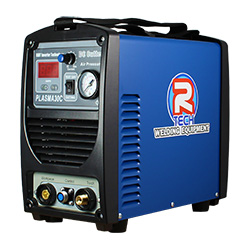
Our R-Tech P30C plasma cutter requires a 240V 13A supply so is very portable and suitable for DIY & light industrial use. It has an automatic cutting start via HF contact start. It features an 8mm make clean cutting and 12mm severance cut on mild steel.
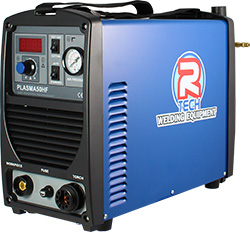
Our R-Tech P50HF plasma cutter requires a 240V 32A supply which is more often than not found in most workshop environments. It has automatic cut starting via HF pilot arc starting with auto-restart and features a generous 18mm clean cut and 24mm severance cut on mild steel.
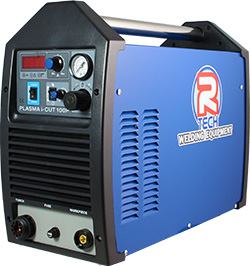
Our R-Tech I-Cut100 plasma cutter requires a 415V three-phase 22A supply which is found in industrial workshops. It has automatic cut starting via HF pilot arc starting with auto-restart and features a massive 32mm clean cutting and 40mm severance cut.
What are the 2 Plasma Arc starting differences?
1. HF Contact first
HF contact offset uses loftier-frequency generated inside the motorcar to jump the gap between torch cutting tip and workpiece, so you only rest the tip onto the workpiece, printing the trigger and the machine volition automatically start cut.
ii. HF Pilot Arc Start (with car-restart)
HF Pilot arc showtime once more uses loftier-frequency generated inside the machine and when the trigger is pressed a airplane pilot arc flame volition come out of the cutting tip about 1 inch long. When this pilot arc touches the workpiece the automobile will sense this and start the main cutting amperage. This has the benefits of existence able to beginning on heavily painted or rusty surfaces etc.
Information technology also features pilot arc re-start which is platonic for cutting mesh and metal with gaps etc. When y'all have come to the end of metal, the machine volition sense this and re-engage the pilot arc then when you lot move the torch to the next piece of metal it volition sense this and re-commencement the main cut power. This saves you having to release the trigger and re-press to start the arc over again.
What is the difference between a Clean cut and Severance cutting?
Make clean Cut
A Clean Cut is where the machine will cut all the way through the material and the cut parts will fall abroad from each other leaving only minimal dross on the bottom edge which tin can easily be pulled off using pliers etc.
The cutting marks will starting time off straight and so requite a slope of a small-scale angle towards the bottom of the cut. The metal should require no extra working before being welded together etc.
Severance Cut
A Severance Cut is where the user is using the machine close to its maximum cutting thickness adequacy. The cut speed will exist much slower compared to a clean cut and the metallic volition require some cleaning up towards the bottom edge.
Plasma Cutting speed, amperage and cutting tip size.
Your cutting speed when plasma cutting is dictated by the amperage used and the size of the material to be cutting.
If you lot are cut 4mm with a 30A machine, you could either prepare the amperage to 20A and have a medium travel speed, or you could gear up the machine to maximum 30A (which will cut 8mm make clean) and enjoy a faster travel speed, yet you may feel slightly more than dross at the bottom of the cut this way.
What happens if yous cutting as well slow?
If you lot cut as well slow yous may experience the arc cut out with a contact start HF machine, or if using a airplane pilot arc motorcar, it may first to splutter (going betwixt pilot arc and main cutting ability). You will likewise become estrus input into work and feel more than dross at the bottom of cut - so increase your travel speed or reduce cutting amperage.
What happens if you cut too fast?
If you cut as well fast yous volition experience two things:
- Poor cut quality. As you have non cut all the mode through the cloth it will non break away from each other at the end of the cut, and it will require a lot of cleaning up before use.
- The blowback of dross. Equally you lot take non cut all the way through and have moved the torch, the dross (cut metal) volition not be able to blow out the bottom, so it volition blow at a severe angle at the bottom and if you are moving far too fast, it will blow back towards the operator.
How to tell if you're cutting at the right speed.
When starting from the edge of the work ensure the metal has been cutting through and the dross is coming out at a maximum of a x-20 degree angle. Then start moving the torch along the work ensuring the dross angle does not increase.
If the angle starts to increase close to a 45-degree angle, slow downward the cutting speed. If you struggle to get a good make clean cut and pocket-sized angle of dross coming out the bottom of the cut, try increasing the cutting amperage.
How to do Piercing with a Plasma Cutter (Not starting the cut from the border of the metal)
When piercing metal at the beginning, this will result is dross existence blown back upwards, so the normal practice is to concur the torch at a 45-caste angle to work, and so the dross blows away from the operator.
Once the cut has started, slowly movement the torch to the ninety-degree angle to work to enable the cutting to go all the way through the material. Once you have gone all the mode through, you may start to move the torch.
Please annotation:
- Piercing will shorten tip life due to more than dross blowback.
- Yous can unremarkably pierce metal upwardly to one/ii the maximum cutting thickness the machine is capable of.
What is Gouging when using a plasma cutter?
Gouging is used when you may desire to remove an old weld or defect in metal and is suited to machines with HF pilot arc starting. You will demand to use a special gouging tip which has a much larger pigsty than a standard cut tip.
Concord the torch at about 45 degrees to work and suit arc length (the altitude between the cutting tip and metal) and speed to blow away unwanted metal.
Please annotation:
- Practice not attempt to gouge also much at one fourth dimension, multiple passes may exist required.
- Be aware that sparks/dross will be generated in this process and to guide dross away from torch/user and take care with other staff in the cutting surface area.
Plasma Torch Consumables
A plasma torch caput has 3 principal consumables which volition require replacing the almost:
- Cut tip.
- Electrode.
- Stand off spring.
The other parts which are the outer retaining nozzle and swirl ring (gas distributor) crave less frequent replacement.
Stand off spring or pointed spacer
This fits onto the stop of the outer nozzle and keeps a distance of 1-2mm between tip and workpiece. This can be removed if yous wish to use a straight edge or template for cutting shapes.
Outer Nozzle
This screws onto the caput and holds the tip/electrode in place.
Cutting Tip
Available in dissimilar pigsty sizes. The larger hole for larger amperage / wider cut arc.
1.1mm for up to 60A, 1.3mm for 80A and 1.5mm for 100A.
This screws into the torch head.
This fits between the tip and the electrode and is made of a non-conductive textile.
What air pressure is required for plasma cut?
Y'all must select a suitable air compressor to be able to supply the right amount of air catamenia to your plasma cutter. Using too small an air compressor will result in the air compressor running all the time, and also the lack of correct air force per unit area to the plasma cutter will result in a poor consistent cutting.
For our R-Tech plasma cutting machines, we recommend the following air compressors equally a minimum to achieve skilful cut results:
All plasma cutters crave a clean dry compressed air supply. Ensure your air compressor is drained regularly. All our plasma cutters come fitted with an air pressure regulator with a h2o trap on the rear of the motorcar.
If this h2o trap has signs of water, drain the water trap and air compressor more often or fit an in-line compressed air dryer like our Aqua Purge Compressed Air Dryer.
What is the post flow air/gas?
When the cutting has stopped air will continue to menstruation from the torch tip for a preset time, this is to permit the torch components to cool down.
How to cutting circles with a plasma cutter?
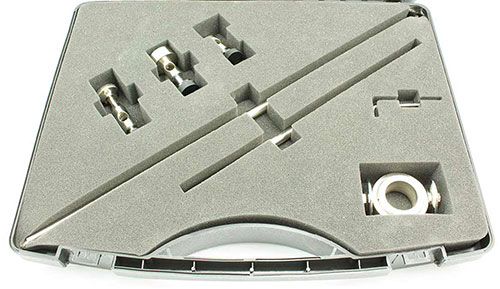
You lot tin easily cutting perfect circles using a circle cutting kit.
This comprises of a ii bicycle guide that attaches to the head of the plasma cutter which incorporates a bearing, so the head can rotate in the guide. You lot and then have extension bars which spiral into the head guide and into the centre of the hole holder which tin exist magnetic, secured via a drilled pigsty or a small indent in work. These will generally cut circles from 70mm to 800mm.
Plasma cut from a template
If y'all wish to cut the aforementioned shape in multiples, you lot can make a template from a non-conductive material and hold the cutting tip confronting the template. As there is an offset from the side of the tip to the centre hole, you will have to allow for this when making your template.
Cutting straight lines when plasma cutting
If you wish to cut a very straight line, simply utilize a non-conductive textile with a straight border to run the cutting tip forth.
Spacer Jump/wheel guide
To enable easier cut and pro-longing tip life, our R-Tech plasma cutting machines come with a stand off spring which holds the tip about 1-2mm from the workpiece.
You lot tin can as well apply the two wheel guide from the circle cutting kit, which allows smoothen travel beyond the work, every bit this is less affected by bumps in metallic when compared to a stand off spring.
Safety
Follow the right condom procedures equally stated in the owners manual.
Y'all will require condom goggles like our Flip Front Plasma Goggles to protect eyes from the plasma arc and suitable welding gloves and non-flammable work habiliment.
Please ensure you follow all relevant health and safety procedures as stated by your visitor.
Plasma Cutter P30C and P50HF Video Demonstrations/Tutorials
Source: https://www.r-techwelding.co.uk/plasma-cutting-how-to-use-a-plasma-cutter-guide
0 Response to "How To Set Up A Plasma Cutter"
Post a Comment